BIRDS IN TANZANIA – STUNNING BIRDS OF TANZANIA
Uncover the most beautiful birds of Tanzania worth marvelling at during Tanzania birding tours. Tanzania in East Africa is known for its unique number of birds, close to 1,160 recognized species, with over 40 endemic species found only in this nation and nowhere else in the world.
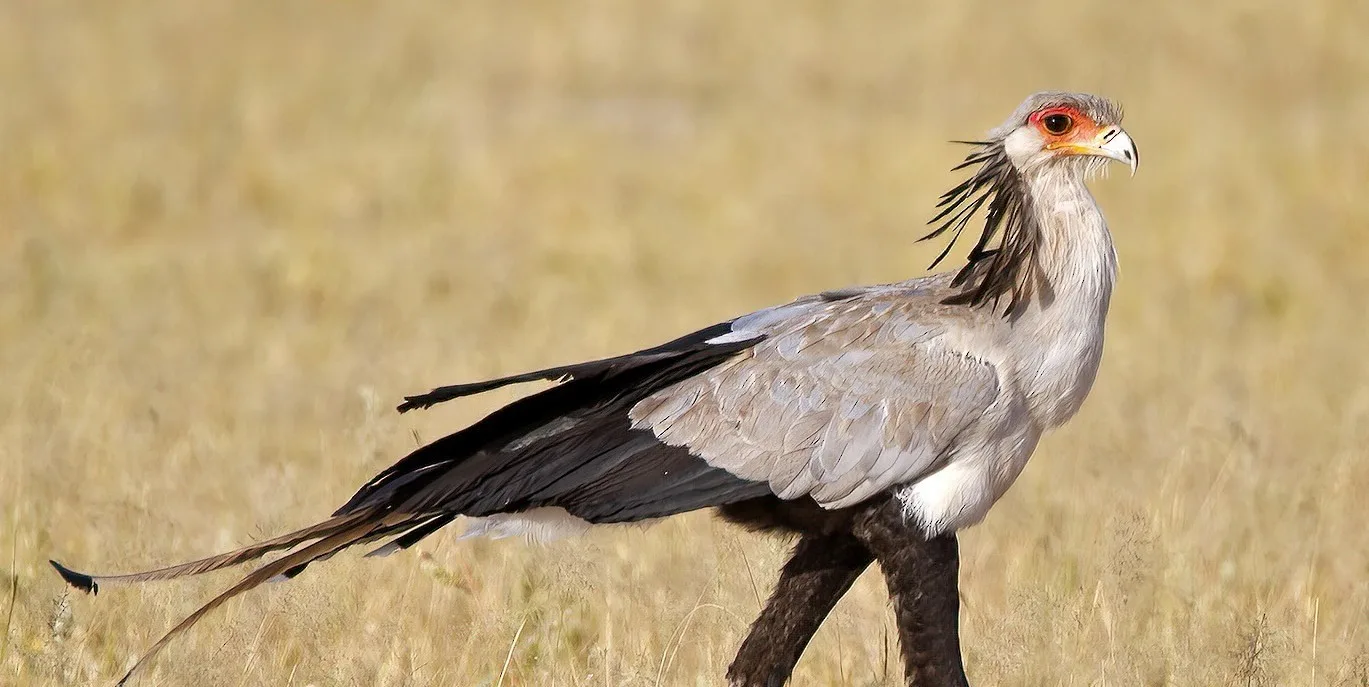
Some of the endemic and resident birds in Tanzania include species like the secretary birds, ostriches, pink flamingos, bush shrikes, and grey crowned cranes, among others.
They are found in several destinations and birding hotspots where they nest, like the Serengeti, Ngorongoro Crater, Lake Manyara, etc., in good numbers.
While Tanzania is a year-round birding destination, the birds of this nation, including the migrants, are best seen during the wet or rainy seasons between November and April, when there is abundant food for them to feed on.
Essential Insights About the Birds in Tanzania
- Tanzania has over 1,100+ Avian species, including endemic and resident birds, which makes it a premier bird-watching destination in Africa.
- This East African nation, Tanzania, has several iconic birds worth seeing on birdwatching tours, such as the greater and lesser flamingos, secretary birds, village weavers, kori bustards, and ostriches, among many others.
- The best way to see most species of the birds of Tanzania is by participating in bird watching safari activities to see the birds in their nests or flying around, among other wildlife safari activities.
- Birds of Tanzania are best seen during the wet season from November to April when breeding happens, and migrants come to the Tanzanian birding hotspots from Asia and Europe.
- Important information worth knowing by keen birders starting to plan Tanzania birding tours to see the stunning birds of the nation, e.g., the best time, packing list, access, etc.
Sample Tanzania Tours & Vacations (Popular Tanzania Itineraries & Packages)





















Here are some details about the birds of Tanzania below.
Endemic Bird Species in Tanzania Africa
Tanzania in East Africa shines with several endemic bird species (~40+) found nowhere else in the world, seen during birding tours.
The endemic birds of Tanzania are often critically endangered and on the brink of extinction, hence in need of proper conservation.
Some of the popular endemic birds include.
Tanzanian Red-Billed Hornbill
The Tanzanian red-billed hornbill is one of the endemic birds of Tanzania seen during birding safaris in the country.
The red-billed hornbills have black and white spotted feathers with a very big red bill designed specifically for digging insects, spiders, and plucking fruits from trees where they often nest, and in savannah grasslands where they often roam.
The Tanzanian red-billed hornbills are often seen in pairs or small groups when feeding or foraging.
Tanzanian red-billed hornbills are often found in parks like Serengeti, Ruaha, Lake Manyara, Tarangire National Parks, etc.
Udzungwa Forest Partridge
Discovered in the 1990s in Udzungwa Mountains National Park, the Udzungwa Forest Partridge is one of the endemic and striking birds of Tanzania worth marvelling at during Tanzania tours.
It is a small, boldly barred brownish partridge about 29cm long with a rufous face, grey underparts, red bill, and yellow legs.
It is endemic to eastern Tanzania in good, outstanding populations in the Udzungwa Mountains and in the Rubeho highlands.
It inhabits mostly the montane evergreen forests in understories at 1,350-2060m elevations.
They often feed on insects, seeds, and roost in trees and are classified as endangered by the IUCN.
Other Endemic birds of Tanzania
| · Beesley’s Lark | · Fischer’s Lovebird |
| · Usambara Bush Warbler | · Banded Green Sunbird |
| · Usambara Eagle Owl | · Yellow Collared Lovebird |
| · Ruvu Weaver | · South Pare White Eye |
| · Usambara Hyliota | · Usambara Thrush |
| · Broad-Ringed White Eye | · White-Tailed Cisticola |
| · Winifred’s Warbler | · Rufous-Tailed Weaver |
| · Uluguru Bushshrike | · Usambara Akalat |
| · Usambara Weaver | · Grey headed go away bird |
| · Pemba Scoops Owl | · Pemba Sunbird |
| · Pemba White Eye | · Kiombero Weaver |
| · Kilombero Cisticola | · Kipengere Seedeater |
| · Loveridge’s Sunbird | · Montane Tiny Greenbul |
| · Moreau’s Sunbird | · Melodious Cisticola |
| · Grey-Breasted Spurfowl | · Iringa Akalat |
| · Rubeho Akalat | · Uhehe Fiscal |
| · Uluguru Mountain Greenbul | · Yellow-Throated Mountain Greenbul |
| · Tanganyika Masked Weaver | · Masked Lovebird |
Most Sought-After Birds of Tanzania
Beyond the endemic birds of Tanzania, there are other popularly sought-after birds often looked for by birdwatchers on birding tours in the skies and nests, such as
Greater and Lesser Flamingos
The two species of flamingos closely related in one way or the other, the greater and lesser flamingos, are among the most sought-after birds of Tanzania seen by birders on bird observation tours.
These lesser flamingos, numbering in the thousands, show stunning feathers with pink colors that are quite unmissable on any birdwatching tour in Tanzania.
They’re found on mostly alkaline lakes infested by algae and crustaceans (shrimp and insect larvae), which act as their feed.
Lesser flamingos are found on Lakes like Natron, Manyara, Magadi, etc., in the same breeding grounds.
Ostriches
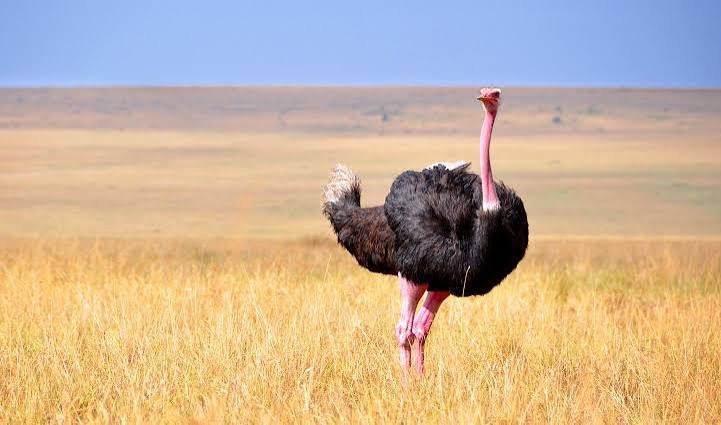
The ostriches are flightless birds native to Africa and are the largest living species of bird and also the largest birds in the world, found also in Tanzania.
They are distinctive in their appearance with a long neck and legs, and the ability to run at high speeds of 60-70 km/hr, reaching heights of up to 2.7m in height and weighing 100-150 kgs.
Ostriches, especially the male species, are known for performing elaborate courtship dances, raising their huge wings to attract females.
Secretary Bird
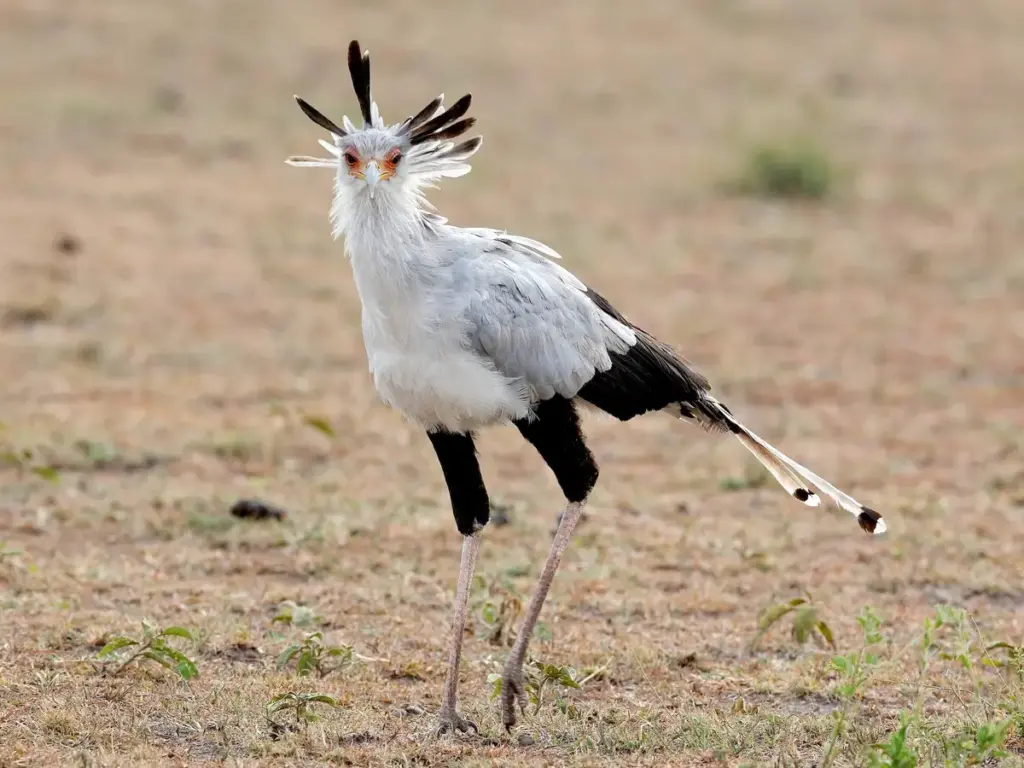
The secretary bird is one of the most sought-after birds in Tanzania, often looked for by keen birders on Tanzania safaris.
Secretary birds are a large predatory species of birds known to be diurnal raptors that hunt snakes, rodents, lizards, and smaller birds.
They have distinctive, long, and powerful legs and a feather crest on the back of their head.
Red-throated Bee-eater
The red-throated bee-eater is one of the beautiful birds of Tanzania worth seeing during birding tours.
These striking birds, the red-throated bee-eaters, light up Tanzania’s open woodlands and riverbanks with their bright colors.
The red-throated bee-eater species have rich red throats, turquoise bodies, and long, pointed wings.
True to their name, the red-throated bee-eaters catch flying insects in mid-air with acrobatic flights.
You’ll often see them in small colonies perched on branches, especially around the Tarangire and Ruaha areas.
Their synchronized aerial displays make the red-throated bee-eaters a favorite for birdwatchers.
Grey Crowned Cranes (Tanzania’s National Bird)
The grey crowned crane is one of the beautiful birds of Tanzania, worth seeing during bird spotting trips.
Tanzania’s national bird, the grey crowned crane, is unmistakable with its golden crown of feathers, white cheeks, and elegant grey body.
These tall, graceful, grey-crowned cranes dance in the wetlands and grasslands of Ngorongoro Crater and Serengeti.
The grey-crowned cranes eat insects, seeds, and small animals. Their loud calls and elaborate courtship dances are unforgettable.
Sadly vulnerable, the grey-crowned crane species remain one of the most beautiful sights on any safari.
Marabou Storks
The marabou storks are one of the birds of Tanzania worth seeing during bird spotting adventures.
Often called the “undertaker bird,” these large scavengers, the marabou storks, have a bald head, long legs, and a huge throat pouch.
They’re common near wetlands and lakes across Tanzania, including Serengeti and urban edges.
Marabou storks eat carrion, fish, and scraps. Standing over a meter tall with massive wings, the Marabou storks play a vital cleanup role in the ecosystem.
Red-and-Yellow Barbet (African Barbets)
The red and yellow barbets are a type of African barbet known for being some of the most spectacular birds to look at during Tanzanian birding trips.
These colorful African barbets are plump, short-necked birds with bold red, yellow, and black patterns.
Found in dry savannas and woodlands like Tarangire and Serengeti, the red and yellow barbets (African barbets) excavate nests in termite mounds.
The red and yellow barbets eat insects, fruit, and seeds. Their loud, repetitive calls and striking appearance make these red and yellow barbets easy to spot and very photogenic.
Superb Starling
The superb starling is another of the beautiful birds of Tanzania worth seeing during birding tours.
As one of Tanzania’s most vibrant birds, the Superb Starling shines with an iridescent blue-green head, orange belly, and white belly band.
Common in parks and lodges across the north, the superb starling forages on the ground for insects and scraps.
Highly social and bold, the superb starling adds brilliant flashes of color to any safari drive.
Pied Kingfisher
The Pied kingfisher is one of the beautiful birds of Tanzania worth seeing during bird spotting tours.
This black-and-white kingfisher, the pied kingfisher, hovers like a helicopter over lakes and rivers before diving for fish.
The pied kingfisher is common around Lake Victoria, Manyara, and other water bodies, and it has a distinctive crest and long bill. Pairs often hunt together.
The pied kingfisher’s precise diving skills and bold black-and-white plumage make it a joy to watch.
Kori Bustard
The Kori bustard is one of the beautiful birds of Tanzania worth seeing during bird spotting trips.
Africa’s heaviest flying bird, the Kori Bustard, strides through Serengeti grasslands and old-world steppes on strong legs and is often seen during safaris.
Kori bustard male species puff up their neck feathers in dramatic displays.
The kori bustards eat insects, seeds, and small reptiles. With cryptic brown-and-grey plumage, the kori bustards blend into the savanna but stand out when they take to the air.
Southern Ground Hornbill
The southern ground hornbill is one of the beautiful birds of Tanzania worth seeing during bird-spotting safaris.
These huge, striking black birds with red face patches and long eyelashes walk in closely related family groups across the savanna.
Found in Serengeti and Ruaha, the southern ground hornbills with a black plumage hunt snakes, insects, and small animals on foot. Their deep booming calls carry far.
The southern ground hornbills are considered endangered but impressive, and they’re like prehistoric giants of the bush.
Yellow-billed Stork
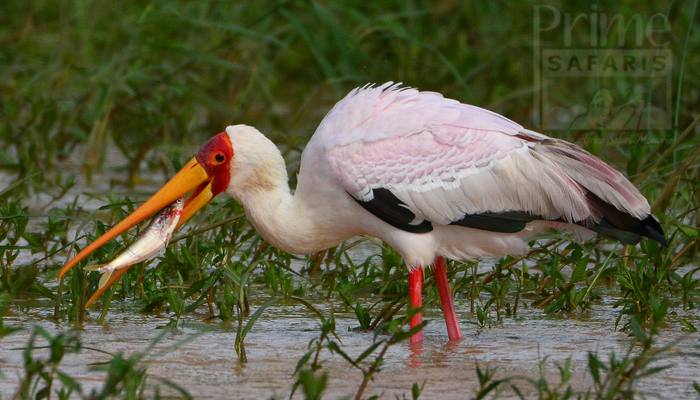
The yellow-billed stork is one of the beautiful birds of Tanzania worth seeing during bird spotting tours.
Elegant waders with bright yellow bills and pinkish legs, these yellow-billed storks are common in wetlands and lakes like Manyara and in parks like the Ngorongoro.
The yellow-billed storks sweep their open bills through shallow water to catch fish and insects.
The yellow-billed storks’ snowy white plumage with black wingtips creates a beautiful contrast against African waters.
Lilac-breasted Roller (One of the Most Colorful Birds of Tanzania)
The Lilac-breasted roller is one of the beautiful birds of Tanzania worth seeing during bird spotting trips.
Famous for its dazzling lilac breast and bright blue wings, this lilac-breasted roller is a safari icon.
Perched on branches in open woodlands across Tanzania, the lilac-breasted roller makes fast swoops to catch insects.
The lilac-breasted roller’s colorful appearance and acrobatic flight displays make it one of the most photographed birds in the country.
Pemba White-eye
The Pemba white eye one of the beautiful birds of Tanzania, worth seeing during bird spotting excursions.
It is a tiny endemic gem found only on Pemba Island, and this small greenish bird has a bold white eye-ring.
It moves in lively flocks through forests and gardens, feeding on insects, nectar, and fruit. Its restricted range makes every sighting special for birders visiting the island.
Sacred Ibis
The sacred Ibis is one of the beautiful birds of Tanzania worth seeing during bird spotting adventures.
These elegant white wading bird species under their own family of Ibises are easily recognized by their snowy-white plumage, bare black head and neck, and long, downward-curved bill.
The sacred Ibis is common across Tanzania’s wetlands, lakeshores, and grasslands like Ngorongoro Crater, Lake Manyara, and Serengeti, and they often gather in large flocks.
Sacred Ibises probe soft mud and shallow water to feed on insects, crustaceans, fish, and frogs.
Once revered in ancient Egypt, their striking contrast and graceful flight make them a classic safari bird.
Other Iconic Birds of Tanzania (e.g., Green Pigeon, Etc)
| · Rufous Tailed Weaver | · Bar-Tailed Trogon |
| · Pel’s Fishing Owl | · Spur Winged Goose |
| · Green Pigeon | · Emerald Spotted Wood Dove |
| · Hartlaub’s Turaco | · Tacazze Sunbird |
| · African Skimmer | · Augur Buzzard |
| · Narina Trogon | · Lesser Jacana |
| · Fork-Tailed Drongo | · Pemba Scops Owl |
| · Black Kite | · Billed Duck |
| · Red Chested Cuckoo | · Purple Grenadier |
| · Long-Crested Eagle | · Lappet-Faced Vulture |
| · White-Bellied Bustard | · White-Browed Coucal |
| . Eastern Imperial Eagle | . Barred Long-Tailed Cuckoo |
| . Common Bulbul (Known For Its Upright Stance) | . Black Headed Lapwing |
| . African Hoopoe (With A Curved Bill, Plus Black And White Wings) | . Village Weaver |
| . Black Headed Gull | . Black Headed Heron |
| . Long Tailed Glossy Starling | . Long Tailed Widowbird |
| . Grey Headed Sparrow | . White Winged Tern |
Other Bird Families of Tanzania (e.g., Bee-Eaters, Old World Orioles, Etc)
| Pelicans | Weavers, E.G., The Village Weaver |
| Hornbills | Storks |
| Bee-Eaters | Rollers |
| Kingfishers | Bustards |
| Ducks & Waterfowls | Guineafowls |
| Pheasants | Pigeons |
| Turacos | Old World Cuckoos |
| Trogons | Swifts (These Can Feed, Mate And Even Sleep On The Wing, And Roost On Vertical Surfaces Only) |
| Cranes | Cormorants |
| Herons | Ibises |
| Nightjars | Jacanas (Walk On Floating Vegetation) |
| Skimmers (Often Seen Flying Low On The Water To Catch Small Fish) | Swallows |
| Penduline Tits | Old-World Vultures |
| Wattle Eyes | Bush Shrikes |
| Old World Orioles | Larks |
| Old-World Cisticolas | Old-World Parrots |
| Old-World Warblers | Old-World Thrushes |
| Old-World Flycatchers | Old-World Waxbills |
| Old-World Sparrows | Old-World Buntings |
Visit Tanzania today and see any of the several species of birds in these bird families firsthand during Tanzania birding trips!
Popular Birding Destinations & Hotspots Hosting the Most Outstanding Tanzania Birds
The most popular birding hotspots and destinations in Tanzania, where bird watchers can find all the beautiful birds of Tanzania, include.
- Lake Natron (~2.5 million Lesser Flamingos)
- Serengeti National Park (500+ Birds)
- Lake Victoria
- Lake Manyara National Park (400+ Birds)
- Ruaha National Park (450+ Avians)
- Nyerere National Park
- Tarangire National Park
- Arusha National Park (400+ Birds)
- Ngorongoro Crater
- Usambara Mountains
- Mount Kilimanjaro
- Udzungwa Mountains
- Pemba Island (4 Endemics)
- Kilombero Floodplain
Bird Spotting Activities Done to See Tanzania Birds
Some of the fun activities done by travelers to see the birds of Tanzania include.
- Bird watching to see the residents and migrants, including the European and Asian species
- Game viewing
- Guided nature walks
- Cultural experiences
- Photography
- Boat cruises, etc. READ MORE!
Best Time to See Tanzania Birds
The best time to see the birds of Tanzania is during the wet season that runs from November to April, when migratory birds from Europe and Asian species camp in birding hotspots, e.g., the go-away birds, and the resident birds breed, changing colors from drab brown to brighter breeding colors, especially the pelicans and flamingos.
It is during these wet (rainy season) months that there is abundant food and lush landscapes that draw most birds to Tanzania.
Additionally, the best time of the day for seeing birds in Tanzania is during the early morning and late afternoon when most birds are active.
It is worth noting that bird spotting can also be done all year round, even during the dry season from June to October, by birders interested in combining their birding excursions with some wildlife viewing in northern and southern circuits.
Threats Facing Birds of Tanzania, East Africa
Birds of Tanzania face serious threats such as
- Habitat loss and degradation exposing birds of Tanzania to animals seeking prey
- Charcoal Production destroying habitats for species of birds in Tanzania
- Illegal trade for different species of birds of Tanzania
- Wetland disturbance
- Climate change
- Unplanned infrastructural developments
Bird Conservation Efforts in Tanzania Africa
Bird conservation in Tanzania is mainly spearheaded by the government in close partnership with conservation organizations like the Wildlife Conservation Society of Tanzania, BirdLife International, African Bird Club, and local communities.
Some of the ongoing bird conservation initiatives include
- Habitat restoration and protection
- Community involvement and empowerment
- Designation of bird hot spots as Important Bird Areas (IBAs) to foster protection
- International Action Plans and support, e.g., for endangered species of birds like the Shoebill
- Focused Research on endemic and resident species
Tanzania Birding Safari Prices
The key safari costs often incurred by tourists on bird-spotting expeditions to see the birds of Tanzania often depend on the season, destination, group size, accommodation, transportation, etc.
Some of the major prices include
| Description | Price (USD) |
| Park Entry Fees | 30-100 |
| Birding Guide | 100-300 |
| Accommodation (with meals) | 80-600 per person per night |
| Transportation | 150-300 |
Consult a reputable tour operator for the most accurate pricing!
How To Get to Tanzania to See Birds of Paradise?
To see the birds in Tanzania, birders need to journey to this nation first by flying into one of its international airports, like Kilimanjaro, Moi, or Julius Nyerere airports, and from there choose a domestic chartered flight or use a 4×4 road transfer to head to the desired birding destination. READ MORE!
Tanzania Safari Accommodation to Stay at During Birding Tours
Bird watchers visiting Tanzania to see the stunning birds of Tanzania in the country’s parks and reserves can stay at various safari accommodations ranging from budget to midrange to luxury, such as Lake Manyara Serena Safari Lodge, Ndutu Safari Lodge, Ngorongoro Crater Lodge, etc. READ MORE!
Tanzania Safari Packing List for Bird Spotting Adventures
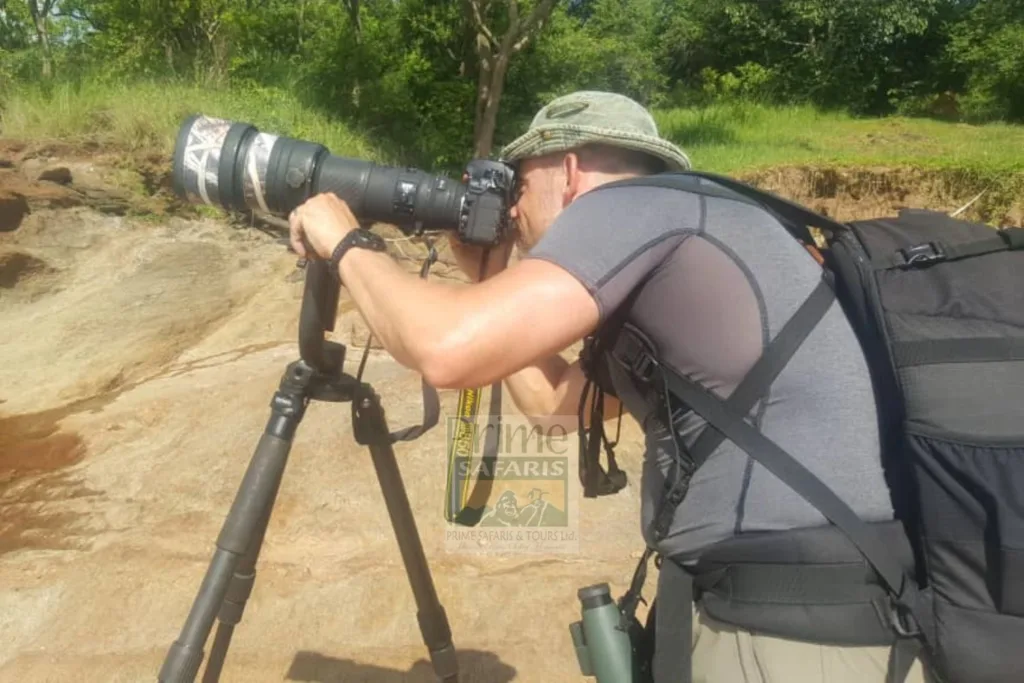
Keen birders on Tanzania bird-spotting adventures are strongly encouraged to wear and pack attire and essentials like neutral colored clothing, birding binoculars, birding books & guides, a camera with a zoom lens, etc. READ MORE!
The Best African Safari Companies Offering Tailor-Made Birding Safaris in Tanzania
- Prime Safaris and Tours Ltd
- Tanzania Safaris and Tours
- Wild Gorilla Safaris
- Africa Safaris Tours
- Kenya Safari Tours
- Uganda Birding Safaris Tour
Commonly Asked Questions About Birds in Tanzania
-
Where Do Birds Sleep When It Rains?
During the rains, birds of Tanzania stay in dry areas protected from rain showers such as dense evergreens, thickets, shrubs, tree trunks and under man-made structures like bridges.
-
Do Birds Wake Up at Night?
Several birds of Tanzania Africa are known to be diurnal, meaning they sleep at night and are active throughout the day, unlike nocturnal birds.
-
What Is the National Bird of Tanzania? | What Is Tanzania’s National Bird?
The grey crowned crane, whose scientific name is Balearica regulorum, is recognized as the national bird of Tanzania, widely known for having a golden yellow feather crown, white & red wings, and standing 3 feet 3 tall.
-
What Birds Are in Tanzania?
Tanzania in East Africa is home to over 1,100 bird species that fall in various categories, e.g., old-world orioles, jacanas, ibises, cranes, larks, bush shrikes, sunbirds, raptors, wattle eyes, birds of prey, rollers, and go-away birds, among many others.
-
What Predator Kills the Most Birds?
Both domestic and wild cats are the top predators that kill most species of the birds of Tanzania in the wild for prey.
-
Do Birds Remember People Who Feed Them?
Surprisingly, yes, birds can recall or remember and recognize people who feed them, especially the mockingbirds, pigeons, and crows.
Marvel at the avifauna of Tanzania firsthand by booking a birding trip with us, your African safari experts. Call or email us now!

Chat to an African Safari Expert
Speak to East African tour expert for safari advice and suggestions