
FORESTS IN TANZANIA - UNIQUE TANZANIA FORESTS
Explore The Most Unique Forests in Tanzania Africa!!
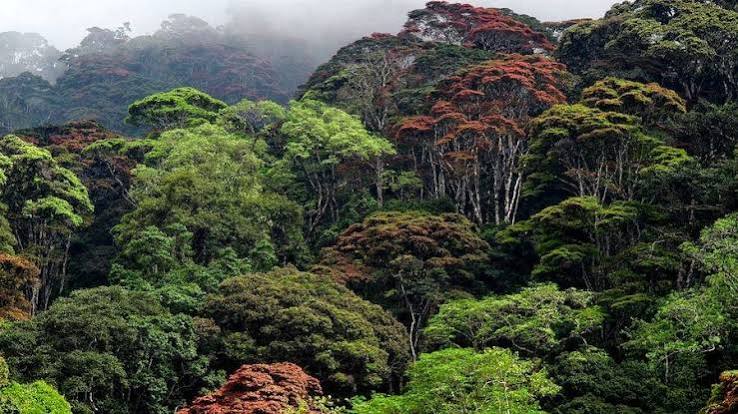
Discover the most unique Tanzania forests worth exploring during African safaris. The unique Tanzanian forests cover ~37.7% of the country’s land area, or about 33.4 million hectares.
They are characterized by different types, including miombo woodlands, montane forests, and coastal forests, among many others.
The forests of Tanzania are found in key ecosystems, reserves, and national parks such as the Eastern Arc mountains, ~12 nature reserves, national parks, etc., and they preserve a unique array of biodiversity, including the endemic and range-restricted species.
Key Takeaways About the Forests of Tanzania
- Tanzania has several unique natural forests that are classified into several primary categories based on climate, elevation, and vegetation.
- Tanzania is home to a variety of forest ecosystems, including montane forests, coastal mangroves, and low-lying rainforests, each playing a crucial role in biological diversity conservation.
- The Tanzania Forest Services Agency (TFS) classifies the forests into reserves (466 national forest reserves and 12 nature reserves) and ensures that they are preserved for future generations.
- More information worth knowing about the forests of Tanzania, i.e., the threats, ecological importance, and conservation.
Sample Tanzania Tours & Vacations (Popular Tanzania Itineraries & Packages)

















Chat to an African Safari Expert
Speak to East African tour expert for safari advice and suggestions
Here is a detailed overview of the unique Tanzanian forests.
Types Of Tanzania Forests
Tanzania, Africa, has several forest types that are of unique ecological importance in the country, and they are detailed below.
Montane Forests (E.G., On Mount Kilimanjaro, Mount Meru, Eastern Arc Mountains, Etc)
Montane jungles are one of the major types of forests of Tanzania, East Africa.
This type of Tanzanian forest is known for being a closed canopy set with high biological diversity, often seen during Tanzanian safaris.
These unique montane jungles are a type found mainly on the mountains of Tanzania or high-altitude areas known for unique levels of endemism, such as
- Mount Kilimanjaro
The montane jungles found on Mount Kilimanjaro are often called water towers because they supply major rivers in the nation that provide drinking water for millions of citizens and generate ~50% of Tanzania’s hydropower.
- Mount Meru
Mt. Meru forests are known for rich biological diversity, with endemic species of plants, beasts, and birds often seen during Tanzania safaris.
- Eastern Arc Mountains (Uluguru, Udzungwa, and Usambara Mountains)
The Eastern Arc Mountains, often called the ‘Galapagos of Africa,’ which include mountains like Uluguru, Udzungwa, and Usambara Mountains, cover over 350,000 ha of surface area and are home to unique forests that are far from being just clusters of trees, known for being biological hubs with high endemism and unique species of wildlife.
Coastal Forests
Coastal forests are one of the major types of jungles in Tanzania, Africa, that cover over 66 patches on ~700 square kilometers of surface area.
Coastal forests are normally small and fragmented patches of forests, mixed with shrubs and thickets found mainly along the Indian Ocean coastline, hosting unique ecosystems with high plant endemism.
Some of the examples of these along the sea shores include the Kazimzumbwi forests (close to Dar es Salaam city), Pugu forests, and Lindi forests.
The coastal jungles, known for their high conservation value, are under serious threat due to agricultural practices and urbanization.
Mangrove Forests
Another type of Tanzanian forest is the Mangrove forests that cover over 150,000 hectares of area in the nation.
The Tanzania mangrove forest types are those found mainly along the coastline and are vital in the protection of the shorelines from soil erosion while supporting marine ecosystems and acting as breeding grounds for fish species.
They are found mainly along the Rufiji Delta (largest), Tanga region, Pangani, and Bagamoyo, as well as along the Indian Ocean coast.
These mangrove forests face so much pressure from charcoal burning, timber trade, and salt production, which calls for more critical conservation efforts aimed at preserving them.
Miombo Woodlands
Miombo woodlands are one of the major types of jungles in Tanzania, Africa.
The miombos, the dominant type, occupy at least 90-93% of the forested area in Tanzania and are characterized by Brachystegia and Julbernardia species.
These savannas or miombos are found in major areas in central, western, and southern Tanzania (Rukwa, Tabora, Kigoma, Lindi, Mtwara, and Ruvuma).
Some of the examples of these include the Selous Game Reserve forests and the Ruaha forests.
Acacia Commiphora Woodlands
Acacia-Commiphora woodlands are another of the major types of jungles in Tanzania, Africa.
This type of forest, the Acacia-Commiphora jungle, is spread across most northern parts of Tanzania because they are adapted to drier conditions, especially in parks like the Serengeti National Park.
Lowland Closed Forests
Lowland closed forests are one of the major types of forests of Tanzania, East Africa.
These are found at lower altitudes, often in scattered pockets with diverse wildlife species.
Some of the examples of these include the Minziro forests and some of the Mahale Mountains forests.
Sacred Forests
Another type of forest found in Tanzania is the sacred forests.
The sacred forests are in most areas of Tanzania secluded or set aside by the local communities or villages for spiritual and cultural purposes.
Some of the examples of these include the Nyumbanitu Sacred forests (Njombe region) and others in the North Pare Mountains (Kiwia, Mangio, Motingi, Rigilia, and Mbale forests).
Dryland Forests and Thickets
The dryland forests are another of the major types of jungle in Tanzania, East Africa.
These dryland forests are considered drought-resistant and, as such, are found in arid and semi-arid regions of Tanzania, like in Singida and Dodoma.
With acacias dominating this type of forest, livestock farming is greatly supported.
Examples of Tanzanian Forests
Some of the notable forests in the country are found in different protected areas such as the nature reserves and parks, as detailed below.
Popular Nature Forest Reserves and Biodiversity Hotspots
Tanzania Africa manages and conserves several forests in the nation under unique nature reserves for tourism, research, education, and preservation purposes. These include:
MINZIRO NATURE FOREST RESERVE
Minziro Forest Reserve is one of the forests of Tanzania that is protected as a nature reserve.
Spanning over 24,000 hectares of land, Minziro NFR is the biggest forest reserve in the country, found in the Kagera region in the northwestern side, and is known for its unique biodiversity.
CHOME FOREST RESERVE (EASTERN ARC BIODIVERSITY HOTSPOT)
Chome Forest Reserve is one of the forests of Tanzania protected as a reserve.
As part of the Eastern Arc biological hub, it is home to a variety of wildlife species endemic to the region.
AMANI NATURE RESERVE
Amani Nature Reserve is one of the jungles in Tanzania and a protected area or reserve.
Amani Nature Reserve, found in the Tanga region and covering ~8,380 ha, is famously known for hosting a series of bird species (340+), such as the African Green Broadbill, making it a perfect spot for birding tours in Tanzania.
Tourists visiting Amani have plenty of chances to also marvel at some of the rarest flowers in the world (St Paulia or African violet), waterfalls, butterflies, the three-horned chameleons, etc.
ULUGURU NATURE RESERVE
Uluguru Nature Reserve is one of the jungles in Tanzania that is preserved as a reserve.
It is popularly known for having a series of endemic species, such as the endemic chameleon species in the steep mountains.
KILOMBERO VALLEY NATURE FOREST RESERVE
The Kilombero Reserve is one of the forests of Tanzania that is preserved as a reserve.
Found in the Morogoro region, the Kilombero valley forest reserve spans ~220 km long Ramsar wetland ecosystem and is home to a vast array of wildlife.
OTHER FOREST RESERVES AND GAME AREAS
| · Mount Longido NFR | · Kipo NFR | · Magamba NFR |
| · Mkingu NFR | · Mount Hanang NFR | · Mount Rugwe NFR |
| · Nilo NFR | · Udzungwa Scarp Nature Reserve | · Rondo NFR |
| · Endulen Game Controlled Area | · Kitwai Game Controlled Area | · Masailand Game Controlled Area |
| · Handeni Game Area | · Kalimawe Game Area | · Ruvu Forest Reserve |
| · Jozani Forest | · Pugu Forest (close to Dar es Salaam city) | · Kazimzumbwi Forest (close to Dar es Salaam city) |
| · Magamba Forest | · Lake Duluti Forest | · Nyumbanitu Forest |
Tanzania National Parks and Game Reserves with Major Forests
Tanzania, an East African nation, also has several safari parks that have unique forested landscapes that house a wide variety of wildlife species. These include.
- Arusha National Park: It features a lush montane jungle and swamps that are home to several primate species, such as the black-and-white colobus monkeys.
- Gombe Stream National Park: Famous for being the research site for Jane Goodall’s research, it has a unique forest (~3,500 ha) that is a natural habitat for chimpanzees in the Kigoma region.
- Nyerere National Park (Selous Game Reserve Forests): In southern Tanzania, the forests here cover ~5 million hectares and are home to a diverse range of plants and fauna.
- Serengeti National Park: It has a riverine forest that hosts several flora and fauna species.
- Udzungwa Mountains National Park: Found in the Morogoro and Iringa regions, the forests here span over 199,000 hectares with diverse flora and fauna.
- Mount Kilimanjaro National Park: In the Kilimanjaro region, the forests in this park cover ~107,828 ha and are home to species not found anywhere else in the world.
- Lake Manyara National Park: Besides being home to rare tree-climbing lions in Africa, this safari park is famously known for its rare and unique groundwater forests.
- Mahale Mountains National Park: It has a unique, remote, and mountainous rainforest (Kasoge) that is home to one of Africa’s largest populations of Chimpanzees.
OTHER SAFARI PARKS AND GAME RESERVE FORESTS OF TANZANIA
| · Kitulo National Park | · Ngorongoro Conservation Area | · Mikumi National Park |
| · Nkomazi National Park | · Ruaha National Park | · Rubondo Island National Park |
| · Saadani National Park | · Saanane Island National Park | · Uwanda Game Reserve |
| · Mafia Island Marine Park | · Tanga Coelacanth Marine Park | · Dar Es Salaam Marine Reserve |
| · Mnazi Bay-Ruvuba Estuary Marine Park | · Katavi National Park | · Tarangire National Park |
These forests of Tanzania host several flora and fauna species that are worth looking at during safaris in Tanzania.
Economic Importance of the Forests in Tanzania
The forests of Tanzania are known for their ecological importance, and this is why they are heavily protected. Some of their importance includes
- Biological Diversity
The forests of Tanzania are biological hotspots that are home to a range of wildlife species, from primates, reptiles, and birds to the small and big mammals often seen during Tanzanian safaris.
- Regulators of Climate
The forested areas in Tanzania act as carbon sinks, mitigating challenging climate changes and also preserving ecosystems from severe flooding and coastal erosion.
- Water Catchment Areas
The forested patches in Tanzania, especially in the Uluguru Mountains and Mount Kilimanjaro, support major rivers such as Rufiji, Pangani, and Ruvu, among others, which support the economy through hydropower generation, domestic use, and agriculture.
- Ecotourism
The Tanzanian forests, especially in national parks and game reserves like Udzungwa, Mahale Mountains, Gombe Stream, etc., attract huge numbers of tourists, especially during the dry season, who come from all over the world to see the endemics in them and other animals like the elephants, which in turn, brings in revenue to the country.
- Support the Livelihoods of Tanzanians
Most of the forests of Tanzania, in one way or another, support the livelihoods of people and communities living inside or close to them as they get to collect firewood, charcoal, and timber for daily use in their homes.
Additionally, locals can also collect food, honey, medicinal plants, and fruits from the forest patches, which are a major part of the rural cuisine.
- Cultural Significance
This relates to the sacred forests, which are known for holding spiritual and cultural significance to the people and are often considered to be cultural world heritage sites where ancestral rituals like the matambiko are performed in local villages or local communities.
Threats To Tanzanian Forests and the Biodiversity in Them (E.G., Climate Change, Deforestation Issues, Etc.)
The biota found in the Tanzanian forests is seriously threatened by various threats that include
- Overexploitation Of Forests Affecting Plant and Animal Species
The overexploitation of forests of Tanzania through excessive logging and other activities ultimately exposes the plant and animal species as their habitats are gone, which puts them at a high risk of poaching and extinction.
- Habitat Loss Due To Urbanization and Agriculture
Since the 1970s, over 12% of the forest habitats in the eastern arc mountains and 30% of the East Usambara Mountains forest habitats have been lost to fires, illegal logging, farming, and mining.
- Pollution
Pollutants from the garbage and sewage poured into the forested areas of Tanzania destroy them with no hope of recovery.
- Climate Change
The severe climate shifts, including high temperatures and glacial retreats (Mount Kilimanjaro), threaten the ecosystems of the forested areas in the country.
- Invasive Species
Additionally, the rise in growth of the invasive species of plants and beasts also destroys forest patches as competition for the few resources becomes stiff, and native species die out.
- Human Activities
Several human activities, such as poaching, overgrazing, agricultural expansions, infrastructure development, and unsustainable methods of fishing, are another of the challenges facing the mangrove, water, and marine ecosystems in the country.
Deforestation in the country is often exacerbated by illegal logging practices, which result from the high demand for charcoal and hardwood timber in urban areas.
This East African nation, Tanzania, loses ~400,000 hectares of forest each year due to the human activities above.
Management And Conservation Efforts of Tanzanian Forests
To protect and conserve the vital forest habitats in Tanzania through the mitigation of existing critical challenges, several organizations (Saving Nature), the Tanzanian government, and stakeholders are working hand in hand.
Most of the national & nature forest reserves (NFRs) are managed by the Tanzania Forest Services Agency, which offers the highest level of protection to them by prohibiting timber extractions and animal hunting, while accepting research and nature-based tourism activities to prevail.
Secondly, the government has also transformed over 700,000 hectares of forests into plantations primarily for softwoods such as cypresses and pines to minimize encroachment on the major forests.
Additionally, the Tanzanian government is actively working towards establishing at least three (3) wildlife corridors in the country in the Udzungwa Mountains (2) and in the Usambara Mountains (1) to reduce forest fires and enable safe movement of elephants between two parks, respectively.
In 2025, the Nyerere Udzungwa wildlife corridor was designated as the country’s first legal wildlife corridor aimed at reconnecting fragmented habitats and ensuring safe passage for elephants.
Lastly, the biodiversity hotspot of the Eastern Arc Mountains is also preserved by the government in over 150 government forest reserves, with ~107 managed for water catchment in areas where forest exploitation is prohibited.
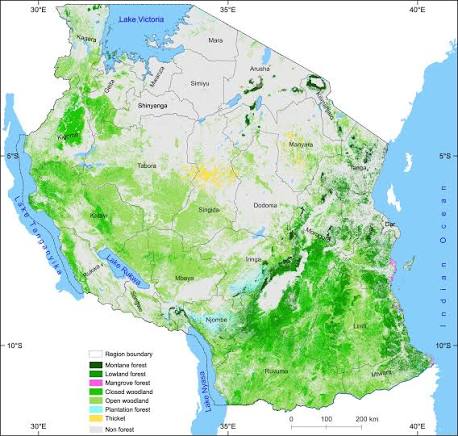
Tanzanian Forests Map
Answers To Commonly Asked Questions About Tanzania Forests
1. How Many Forests Are There in Tanzania?
Tanzania is home to several forests covering over 38.8 million hectares, which is about 40-55% of the country’s land area.
- What Is the Biggest Forest in Tanzania?
The biggest forest area in Tanzania is the Minziro Forest Reserve, found in the Kagera region, spanning over 24,000 hectares, known for its unique groundwater forests that act as an outlier for the Guinea-Congo low-lying forests.
- What Are the Four Main Forests in Tanzania? /What Type of Forest Is in Tanzania?
The main types of forests of Tanzania include
- Miombo woodlands
- Montane Jungles
- Coastal Jungles
- Acacia-Commiphora woodlands, etc.
- What Is The 3000-Year-Old Tree in Tanzania?
The 3000-year-old tree in Tanzania is called the Tessmannia princeps, which was recently discovered following botanical surveys in the Udzungwa Mountains, and it is not found anywhere else on Earth.
- Are There Forests in Tanzania?
Yes, Tanzania has several forests, which include tropical rainforests and mangrove forests, among many others.
For more information about the forests of Tanzania, contact our team of experts today!