
Tanzania Great Migration Safari - Tanzania Wildebeest Migration Tours

Discover the most thrilling Tanzania great migration safari, also known as Tanzania wildebeest migration tours, worth enjoying during African safaris in Tanzania.
The great migration safari in Tanzania takes place mainly in the Serengeti National Park and sometimes extends to the nearby safari parks like Ngorongoro Conservation Area and Tarangire National Park.
Tanzania’s great wildebeest migration tours offer a year-round wildlife spectacle following over 2 million ungulates (wildebeests, zebras, thomson’s gazelles, and grant’s gazelles) through the Serengeti-Mara ecosystem.
The key migration times in Tanzania include calving in the south (Southern Serengeti) (Jan-March and Nov-Dec) and dramatic river crossings when herds push north (Northern Serengeti) (Jul-Oct) to the Masai Mara.
Travelers on great wildebeest migration safaris in Tanzania can easily combine Serengeti and Ngorongoro Crater safaris for premier, often private game viewing.
Key Takeaways About the Great Migration Tour in Tanzania
- The great wildebeest migration safari in Tanzania occurs mainly in the Serengeti National Park, though other northern safari circuit parks like Ngorongoro, Tarangire, and Lake Manyara get a few great migration sightings.
- Tourists on great migration tours in Serengeti National Park have perfect opportunities to witness major river crossings of the great migration at both the Grumeti River and the crocodile-infested Mara River from the short grass plains of the Masai Mara to the northern Serengeti.
- Travelers have unique opportunities to witness the calving time in the Ndutu plains during the great wildebeest migration in Tanzania’s Serengeti National Park, where over 8,000 wildebeest calves are born per day in the long and short grass plains.
- Important information worth knowing by travelers as they start planning Tanzania’s great wildebeest migration tours, related to e.g., best time planning tips, tour operators, access, etc.
What Is the Great Serengeti Wildebeest Migration?
The great wildebeest migration is a natural spectacle with no scientific proof that involves the clockwise movement of over 1.5-2 million ungulates along an age-old route (large herds of blue wildebeest, thomson’s gazelles, grant’s gazelles, and zebras) across the Serengeti National Park in Tanzania to and from the Masai Mara National Reserve in Kenya in search of water and fresh pastures.
Serengeti National Park
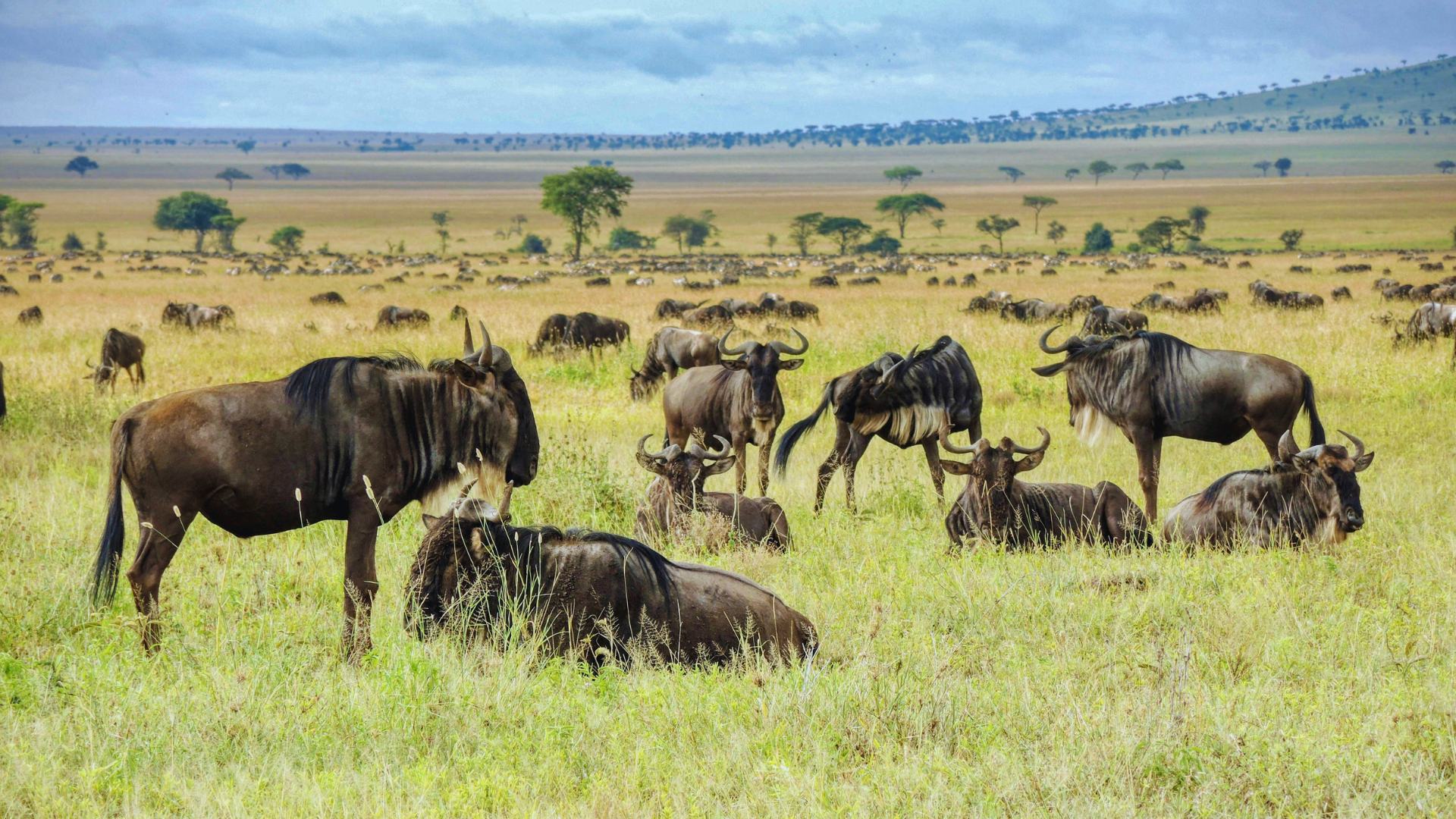
Serengeti National Park in northern Tanzania is the main travel destination for the great Serengeti migration safari.
Named ‘Serengeti’ from the Maasai word ‘Siringet’ meaning endless plains, this Tanzanian national park spanning ~ 14,763 square kilometres is dotted by open and golden savannah grasslands, acacia trees that are home to several wildlife species, including the Big Five, herds of zebras, herds of gazelles, among other small and large mammals and birds (550+).
Established in 1940, and a UNESCO World Heritage Site since 1981, the Serengeti National Park stretches in a vast wilderness across northern Tanzania, connecting seamlessly with the Masai Mara National Reserve via an unfenced border, allowing for the greatest show on earth -the great Serengeti migration to take place seamlessly.
It is worth noting that while Serengeti National Park is the main destination for the great Serengeti wildebeest migration, other northern safari circuit parks in Tanzania also offer sightings of this wildebeest spectacle in the
Why Choose the Great Serengeti Migration Safari in Tanzania?
African safari travelers often choose to witness the great wildebeest migration from Serengeti National Park because of the following reasons.
- Vast Landscapes: Serengeti NP is big enough with vast landscapes in safari areas like Seronera, where tourists can easily see the great migration and take stunning pictures without overcrowding.
- Diverse Wildlife: Because of its large size, the Serengeti accommodates an outstanding number of wildebeest herds, zebras, and gazelles alongside other wildlife species like the big cats, which makes wildlife viewing exceptional.
- Exclusivity: Serengeti NP offers tourists a wide range of exclusive properties worth staying at during private safaris for guests seeking comfort and personalized experiences.
Tanzania Serengeti Wildebeest Migration Timing, Locations & Experiences
Much as the great migration is generally believed to occur all year round, for great wildlife viewing of this spectacle is dictated primarily by timing is quite important because the different months offer different wildlife sightings of the herds of wildebeests and experiences in the Serengeti-Ngorongoro ecosystems, as detailed below for further reading.
January, February, March – Southern Serengeti & Ndutu Area – Calving Season
The vast herds of wildebeests continue moving south to settle in the southern plains of the Serengeti ecosystem, and the calving period begins, where herds of thousands of wildebeests are born daily (~8,000), attracting high predator activity often seen during game drives.
Several lions, wild dogs, cheetahs, and hyenas feed on the most vulnerable calves during this period, making predator-prey interactions fascinating, and only the continuous births of a million animals (baby wildebeests) that often overwhelm the big cats keep the herds of the wildebeest numbers high.
Close to mid-March, the herds start moving from the Southern Serengeti in preparation for the journey ahead to the central Serengeti, lingering in one point in the Ndutu area for fresh grazing on the lush pastures.
April, May – Central and Western Corridor of the Serengeti – Grazing and Rutting
In April, the great migration is in the Ndutu region, where nutritious grasses or fresh grasses are often available, so the animals graze freely as they move towards the Central Serengeti.
April and May are mainly the rainy season (long rains) and the primary rutting and breeding period, characterized by movements of the main herds of wildebeests through the Seronera region (central Serengeti) heading to the western corridor.
This period in the Central and western corridor comes with great discounts on permanent lodges and camps, making it perfect for budget travelers.
June – Western Corridor- Grumeti River Crossings
As the rutting season winds down in early June and the dry season begins with some short rains, a million wildebeest herds continue to move west (western corridor of the Serengeti NP); visitors can see the wildebeests crossing the deadly Grumeti River, infested by crocodiles, into the Grumeti Reserve.
The Serengeti safari game drives during this period are more fun and offer spectacular views as large herds of a million wildebeest thunder across the Serengeti plains to the northern parts of the Serengeti park (Northern Serengeti) to head to the Maasai Mara, crossing the Mara River.
November and December – Central Serengeti: Preparation for Calving Season and Crossing of the Crocodile-Infested Mara River
In November and December, during the short rains, the vast herds of wildebeest migrate back south (Northern Serengeti), crossing the Mara River from Kenya’s Maasai Mara, moving through Loliondo, Lobo valley, Seronera, and the central plains to reach the Lake Ndutu plains in the southern Serengeti plains and northern Ngorongoro Conservation Area (Ngorongoro Crater).
Game drives during this period offer some of the most fascinating views of the herds of the wildebeests crossing the Mara River or the wildebeests migrating from the short grass plains of the Masai Mara.
Top-notch Tanzania Safari Accommodation to Stay at During Great Wildebeest Migration Tours
Tourists on a great wildebeest migration tour in Tanzania have several accommodation options to stay at to get front-row seats to the wildebeest migration, ranging from budget and midrange to luxury tented mobile camp and permanent lodge options.
Some of the popular mobile camps include Serengeti Wilderness Camp, Ndutu Wilderness Camp, Ubuntu Migration Camp, Namiri Plains, Four Seasons Serengeti Lodge, etc.
Best Time to Visit Tanzania for Great Migration Tours
The best time to visit Tanzania for the annual migration tours is during the dry and wet months of January-March and November-December (calving time) and April-June (Grumeti river crossings & rutting season) for prime wildlife sightings as the herds of animals follow far north routes seeking fresh grazing.
Tanzania Safari Costs Incurred on The Great Serengeti Wildebeest Migration Tour
Travelers on great wildebeest tours in Tanzania incur several costs per day (e.g., ~USD 300-1,000+) depending on travel style, accommodation, transportation, park entrance fees, meals, add-on safari activities, etc.
Planning Tips for A Great Migration Tour in Tanzania
Tourists seeking to experience a hassle-free wildebeest migration safari experience in Tanzania are strongly advised to consider these tips and guidelines.
- Booking: Consider booking your safari at least 6-12 months in advance if interested in viewing the great migration of huge herds of wildebeests in prime locations like the Northern Serengeti.
- Safari Types: Choose private safaris if they fit in your budget because they offer more flexibility with fewer crowds.
- Tour Operators: Use travel agencies well-versed with the great migration patterns to ensure that they place you in the right viewing areas
- Packing List: Carry essential items and clothing like a camera with a zoom lens, binoculars, insect repellent, sunscreen, malaria prophylaxis, neutral colored clothing, walking shoes, etc.
Alternative Activities to Do During Great Migration Tours in Tanzania
- Daily game drives in 4×4 safari vehicles to see the herds of wildebeests
- Guided walking safaris to see the herds of wildebeests on foot
- Photography to capture the herds of wildebeests
- Hot air balloon rides to see the herds of wildebeests from above
- Cultural experiences to see the herds of wildebeests
- Basic camping to witness the herds of wildebeests
Getting To Tanzania for Great Migration Tours
Most tourists visiting Tanzania for the annual migration tours can get to this country by air or water, with the most recommended alternative being air.
Travelers can fly to Kilimanjaro International Airport or any other airport in the country and, on arrival, use a domestic chartered flight to Serengeti airstrips like Seronera or Kogatende, etc., or use 4×4 road transfers arranged by tour operators to get to the respective Serengeti National Park gates. READ MORE!
Great Migration Tanzania Map
Reputable Tanzania Tour Companies Offering the Best Great Migration Packages
- Prime Safaris and Tours Ltd
- Tanzania Safaris and Tours
- Wild Gorilla Safaris
- Kenya safari Tours
- Africa Safaris Tours
Commonly Asked Questions About the Great Wildebeest Migration Safaris in Tanzania
-
What Is the Best Month to See the Great Migration in Tanzania? | When To See the Wildebeest Migration in Tanzania?
The best time to see the Tanzania great migration is generally during the dry months from July to October, when vast herds of ungulates cross the Mara River into the Serengeti National Park.
-
Is The Great Migration Better in Kenya or Tanzania?
Both East African nations offer incredible views of the great wildebeest migration, so the choice on which is better highly depends on your preferences.
| Kenya’s Masai Mara | Tanzania |
| Masai Mara -Top location in Kenya | Serengeti National Park- Top Location in TZ |
| Prime Time in the Masai Mara is in July -October (Mara River Crossings) | December -March (calving season) and April -July (northward movements) |
| More dramatic, high-intensity, and more crowded wildlife viewing along the Mara River in the Masai Mara | More vast, less crowded landscapes with longer, great Serengeti migration viewing of the wildebeests as they move in a clockwise direction far north |
| Dramatic Mara River crossings of herds of wildebeests with good predator-prey interactions, especially in private conservancies of the Masai Mara | Large, open and short grass plains, high predator -prey interactions with large numbers of lions |
-
Are There Crocodiles in the Serengeti?
Yes, there are Nile Crocodiles in the Serengeti National Park, especially in the Mara and Grumeti rivers, which feed on massive herds of animals.
-
What Is the Top Predator in the Serengeti?
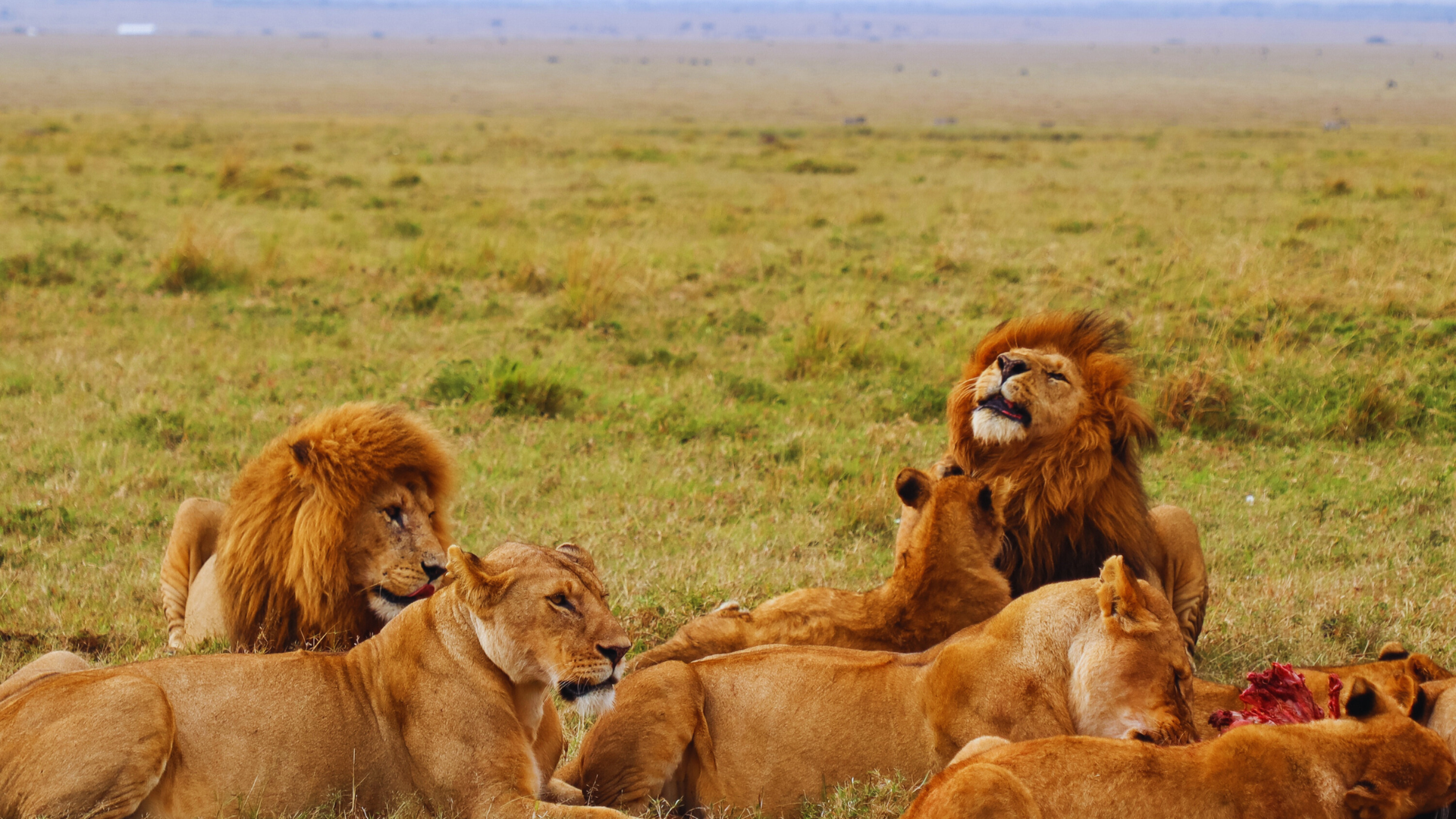
The top predator in the Serengeti National Park is the African lion, and there are close to 4,000+ in this Tanzanian park and they feed on the huge herds of animals in the park.
Call our team of African safari experts now for tailored wildebeest migration dream safari packages in Tanzania!